🧭 Most organizations confuse a list of vulnerabilities with a risk scenario.
They’re not the same thing.
A vulnerability tells you what’s broken. A risk scenario tells you what it costs >and how likely it is to cost you.
I’ve sat in hundreds of rooms where a CISO pulls up a dashboard full of reds and yellows and says, “We have 14,000 critical vulnerabilities.” And the CFO nods, because what else do you do with that number? You can’t compare it to anything. You can’t act on it. You certainly can’t budget against it.
A risk scenario reframes the entire conversation.
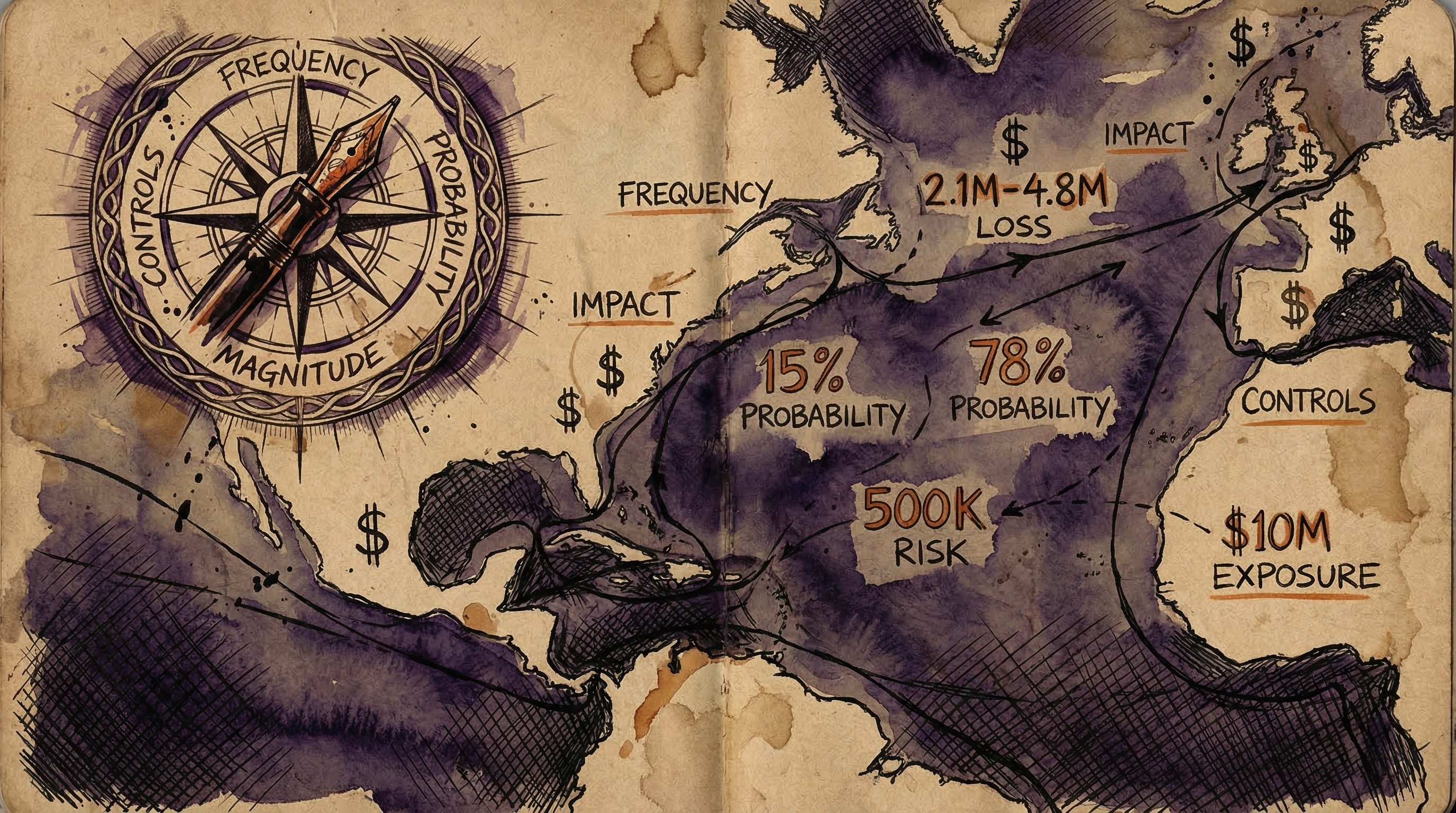
It asks four questions:
↳ What could happen? Not everything. A specific event >ransomware hits your ERP, a third-party breach exposes customer PII, a misconfigured cloud bucket gets scraped.
↳ How often could it happen? Not “it’s possible.” An actual frequency. Once a year? Once in ten years? This is where most people freeze, because they’ve never been asked to estimate frequency with discipline.
↳ If it happens, what does it cost? Not “a lot.” A range. Minimum, most likely, maximum. Legal fees. Business interruption. Regulatory fines. Reputational damage you can actually model.
↳ What’s already in place to prevent or contain it? Your controls. Not a checkbox list >a real assessment of whether they work, how mature they are, and what they actually reduce.
When you put those four things together, you don’t have a vulnerability count. You have a loss scenario with a probability distribution and a financial range.
That’s what a board can act on.
I worked with a CISO in São Paulo who had been asking for budget for two years. Every quarter, the same deck >vulnerability charts, compliance gaps, industry benchmarks. Every quarter, the same answer: “We’ll revisit next cycle.”
We rebuilt the conversation around three risk scenarios. Not fourteen thousand findings. Three stories about money.
The first one showed a $4.2 million expected loss from a ransomware event targeting their logistics platform >with a 23% annual probability given their current control posture.
The board approved the budget in the same meeting.
They didn’t suddenly understand cybersecurity. They understood consequence. That’s what a risk scenario does >it translates technical reality into the language of decisions.
🦑 If your CISO can’t tell the board a story about money, the board will write its own. And it won’t have the right numbers.
What does your risk conversation look like >a vulnerability list, or a loss scenario?